Many professionals struggle to focus when family life and tasks overlap. The 1990s trend of kitchen/office combos is back, and that blend can be helpful if planned well.
Finding quiet home office ideas matters when boundaries blur and interruptions rise. It takes time to shape a dedicated space that supports work without constant breaks.
Simple tips make a big difference. Establishing routines, assessing your layout, and using small partitions can carve out a productive zone.
When a separate room is not available, creativity pays off. Smart furniture placement and clear schedules help manage noise and protect focused time on key projects.
Assessing Your Available Workspace
Start by mapping the pockets of space you already own. Walk through each level and note which corners get light, which suffer noise, and which see the least foot traffic.
Think about whether an underutilized room or a narrow alcove can become a productive workspace. An attic area, for example, often needs only small decor shifts to feel Pinterest-worthy and professional.
- Look for compact hideaways that offer privacy for calls and focused blocks.
- Plan layout tweaks to make awkward corners feel intentional, not cramped.
- Prioritize the spot with the least foot traffic to protect deep work time.
Small, creative treatments let a modest square foot offer full functionality. With careful assessment, any modest space can support the tasks that matter most.
Creative Quiet Home Office Ideas for Small Areas
A tight footprint can still deliver a professional-grade workspace. With a few smart moves, even tiny spaces support focused work and a neat daily setup.
Under the Stairs
Utilizing the area beneath stairs turns an awkward nook into a compact desk zone. A shallow shelf, task lamp, and cable clips keep the workspace tidy.
Closet Conversions
Converting a closet creates a tucked-away office that separates work from living areas. Add shelves, a slim desk surface, and a small chair. When the door closes, the space feels like a real room.
Fold-Down Desks
Fold-down desks attach to a wall and disappear when not in use. They suit tiny apartments and multiuse spaces. Pair one with a portable shelf and a plant to soften the corner.
- Tip: Keep supplies organized so the area clears fast.
- Tip: Pick compact furniture to make small spaces perform like larger ones.
Maximizing Large Spaces for Shared Productivity
A long wall and the right furniture can convert open square footage into an efficient shared workspace. A long, sleek desk—think a repurposed buffet table—makes a striking communal surface and keeps each person’s area defined.
Line up tables along the wall to give multiple people uninterrupted room to work. Use a tall bookcase or a privacy screen to split the space into separate corners without building new walls.
Keep desk surfaces clear by storing files and supplies on a bar cart. That mobile unit holds items close by and makes cleanup fast.
“Shared spaces perform best when each person has a clear boundary and the tools they need within reach.”
- Tip: Turn a shed or garage into a dedicated room for privacy and fewer distractions.
- Tip: Arrange seating so everyone gets light and elbow room to boost productivity.
These office ideas suit families and teams who need to share one large room while keeping focus high and boundaries respected.
Implementing Effective Lighting and Ergonomics
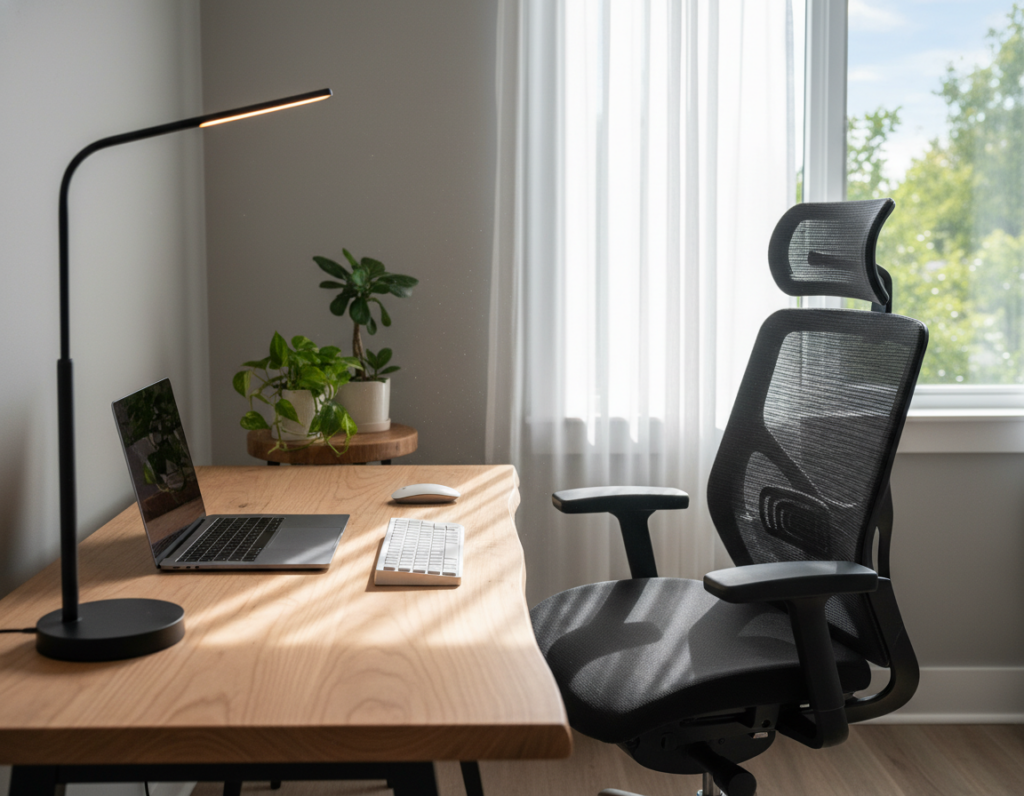
Proper illumination and an ergonomic chair cut fatigue and sharpen focus during long tasks. These two elements work together to shape a productive workspace and a healthy environment for sustained work.
Task Lighting Benefits
Task lighting eases eye strain by aiming light where a person actually needs it. It prevents the need to flood the entire room with brightness. A desk lamp with adjustable color temperature helps match the body’s natural rhythms.
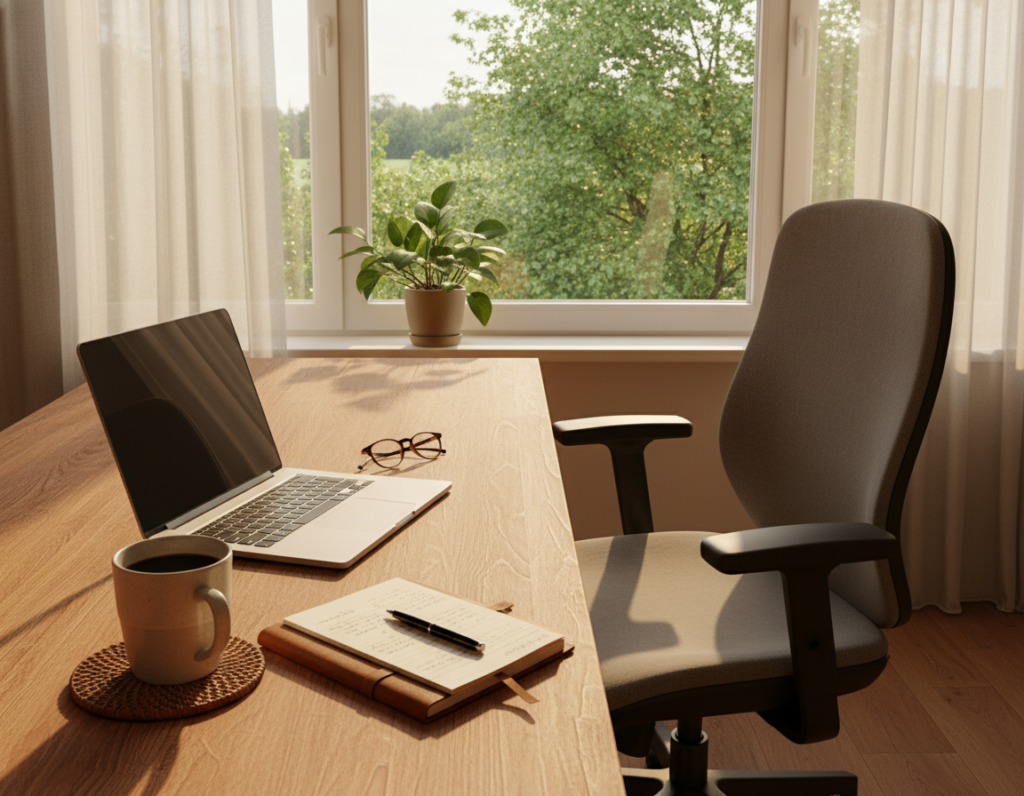
Natural light from a nearby window can reduce eye fatigue and lift mood. Layering sources — ambient, task, and accent — creates a focused atmosphere that supports deep work.
Choosing a Supportive Chair
Choosing a supportive chair is essential to lower daily physical stress. Whether someone picks a traditional desk chair or a cushioned stool, the key is lumbar support and seat height that match the desk setup.
Ergonomics protect the neck, back, and wrists so concentration lasts longer. Small changes in posture and seating translate into a more positive mood and a welcoming atmosphere for long work sessions.
“Layered lighting and the right chair make the space work harder so people can focus better.”
- Tip: Use adjustable task lamps to target projects without glare.
- Tip: Test chair settings and change them weekly to find the most comfortable position.
- Tip: Prioritize both light and posture to reduce distractions and maintain productivity.
Reducing Noise Through Strategic Furniture Placement
Moving big pieces strategically creates a physical buffer that preserves attention in a busy workspace.
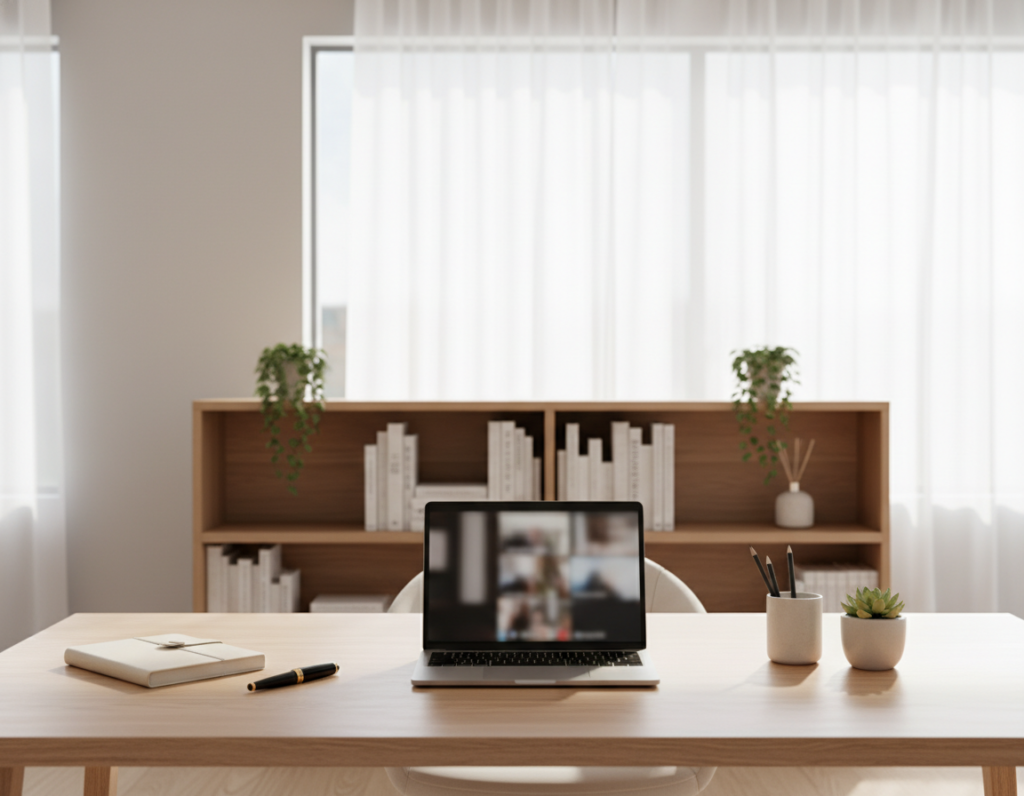
Place a tall bookcase near the desk to act as a sound barrier. A heavy shelf or cabinet absorbs and redirects noise so the main work area feels calmer.
Set the desk along a less-used wall to cut down on visual and auditory interruptions. Position the chair so it faces away from high-traffic routes and toward a steady light source.
Using weighty furniture to block sound is one of the simplest ways to protect focus in shared living spaces. Thoughtful layout creates a buffer that keeps professional tasks separate from daily life.
- Move tall storage beside the desk to form a barrier.
- Place seating away from busy corridors and the kitchen to reduce disruptions.
- Arrange zones so office needs remain distinct from common spaces.
Result: A planned arrangement improves daily productivity and shapes an environment where work flows with fewer interruptions.
Enhancing Focus with Personal Decor Touches
Personal touches transform a functional space into a place someone wants to use. They make the workspace feel personal and steady the day’s rhythm.
The Role of Plants and Artwork
Artwork and framed family photos lift mood and make a corner feel welcoming. Choose pieces that inspire calm or energy, depending on the task at hand.
A single small plant in the corner reduces stress and introduces a natural cue that signals a pause from screens. It also refreshes air and sightlines.
Keep decor to meaningful items only. Too many accessories create clutter and break focus. Vacation mementos or a favorite print work best when they stay intentional.
“Curated personal touches help people stay motivated and make the work area more human,”
- Use two pieces of artwork to anchor a wall without crowding it.
- Display one or two photos to keep connections visible but unobtrusive.
- Limit desk trinkets so the surface stays clear for tasks and thinking.
Securing Your Professional Environment
Small security upgrades can change an entire setup from vulnerable to professional. When a workspace holds sensitive files or valuable equipment, physical locks and digital safeguards matter.
The Schlage Encode™ Smart WiFi Lever lets someone lock a guest room turned home office with keyless, remote access. It keeps the room private and gives clear control over who enters.
Combine that hardware with password managers and updated software to protect digital accounts. These steps reduce the chance of unauthorized access while the person is away.
- Designate the desk a strict no-kid zone to prevent accidental damage or exposure of confidential papers.
- Use smart locks and routines so only authorized people can enter the professional room.
- Keep backups and encryption for files stored on the main computer.
“A secure setup is a fundamental part of a professional home office, ensuring business remains protected at all times.”
For practical design tips that boost productivity and security, see this office design guide. These security-focused office ideas provide peace of mind and let people focus on work without worry.
Maintaining a Clutter-Free Atmosphere
A tidy desk resets focus faster than any productivity app. Keeping clutter under control helps someone start each block with clear intent.
Hidden Storage Solutions
Use baskets, drawers, and closed bins to tuck away loose items and paper. A slim cabinet beside the desk creates an out-of-sight place for supplies and cables.
Label containers so retrieval stays fast. When visible items are limited, the space feels lighter and calmer.
- Tip: Stash chargers and notepads in one drawer to avoid surface clutter.
- Tip: Use vertical shelving to keep the area neat without losing light.
- Tip: Rotate decorative pieces so the environment does not feel crowded.
Daily Reset Habits
End each day by clearing the workspace for ten minutes. Put documents back, wipe the surface, and set up a simple to-do for the next day.
These habits help the home office feel organized and ready. A tidy environment improves mood and supports longer stretches of deep work.
“A daily reset keeps clutter from piling up and makes each morning easier.”
Utilizing Technology for a Seamless Workflow
Small tech tweaks can make the daily workflow feel effortless and steady. Start with cable control: a binder clip cord organizer, as featured in Wired, keeps the desk tidy and prevents visual clutter.
Good lighting and smart device management sustain energy through the work day. Choose adjustable task lighting and set phone notifications to prioritize alerts only when needed.
Design hacks make a big difference without cost or complexity. Label chargers, group cables with clips, and use a single power strip to centralize plugs.
- Binder clip cord organizer: low-cost, high-impact for cable routing at the desk.
- Smart lighting: adjustable color temp reduces fatigue and boosts productivity.
- Minimal device rules: schedule focus blocks and mute nonessential apps.
It takes time to find the right tools, but once chosen they make the workspace feel professional and efficient every day.
“Keeping cables organized is one of the best ways to remove visual distractions and protect focus.”
Conclusion
A few steady adjustments help someone shape a reliable workspace that fits daily demands. They can add storage, tweak lighting, and set simple routines so work blocks stay productive. This approach keeps the area professional and usable.
Applying tested office ideas and small layout changes transforms any modest space into a purposeful zone. Consider modular furniture, clear rules for shared spaces, and a plan to protect focused time. For more on designing effective focus areas, see this focus spaces.
Consistent effort pays off. By using practical tips and setting boundaries, the person creates a balanced, secure part of the home that supports their professional goals and daily work.