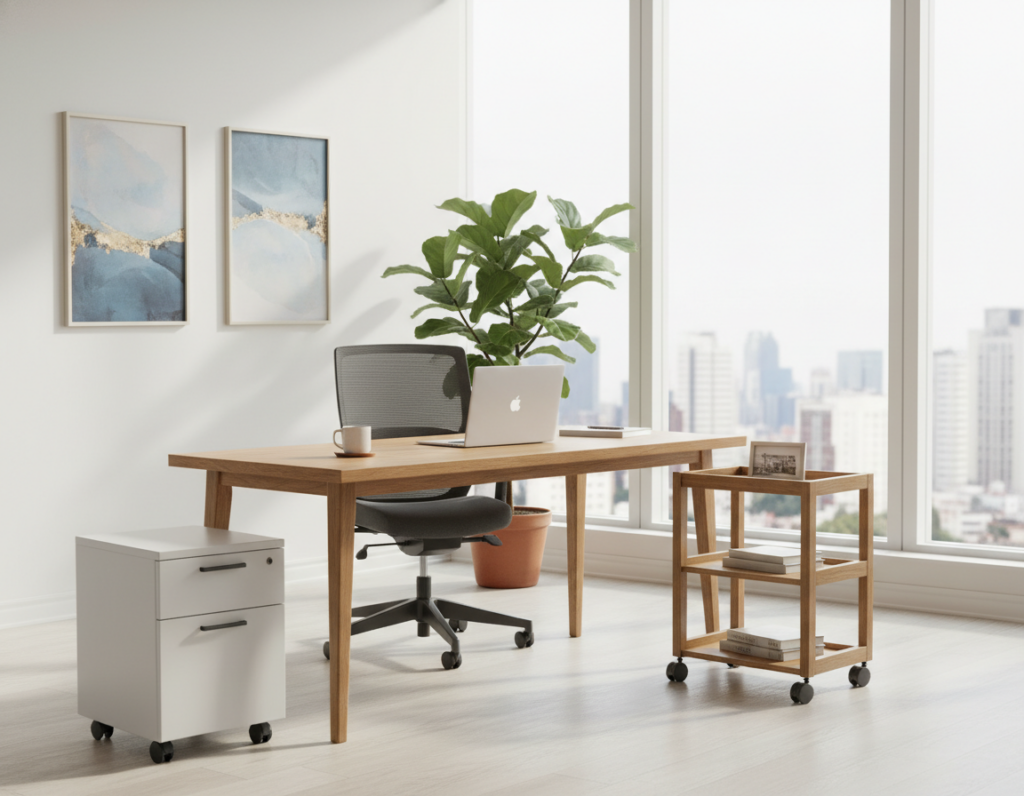
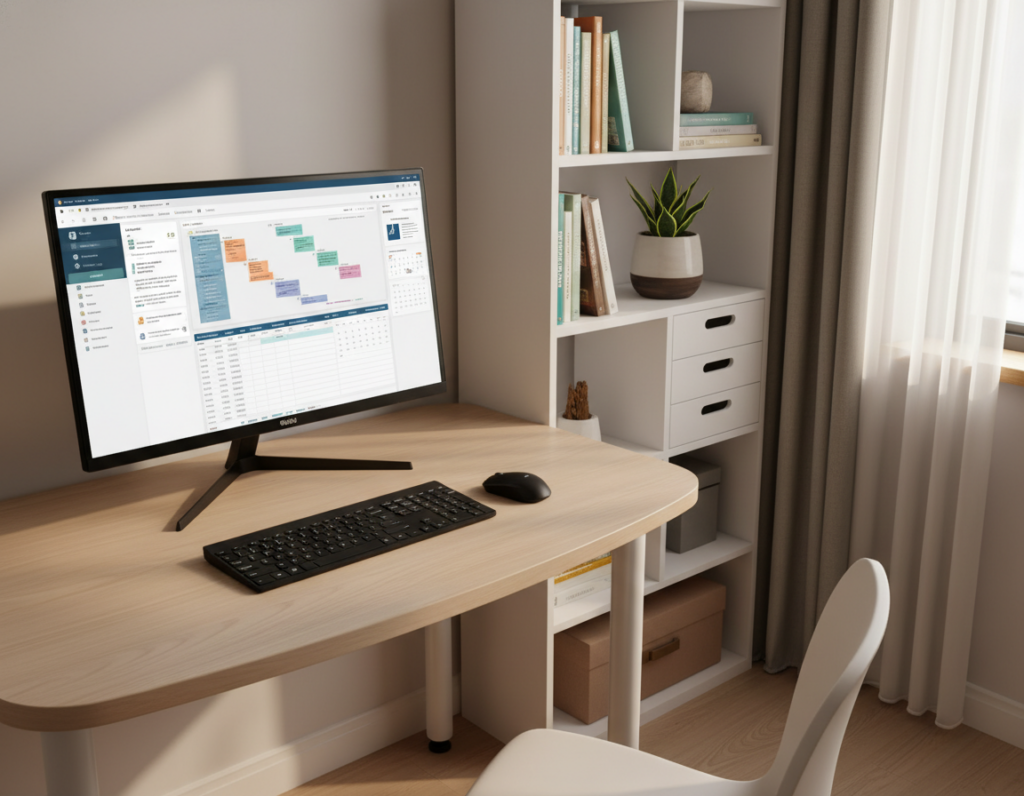
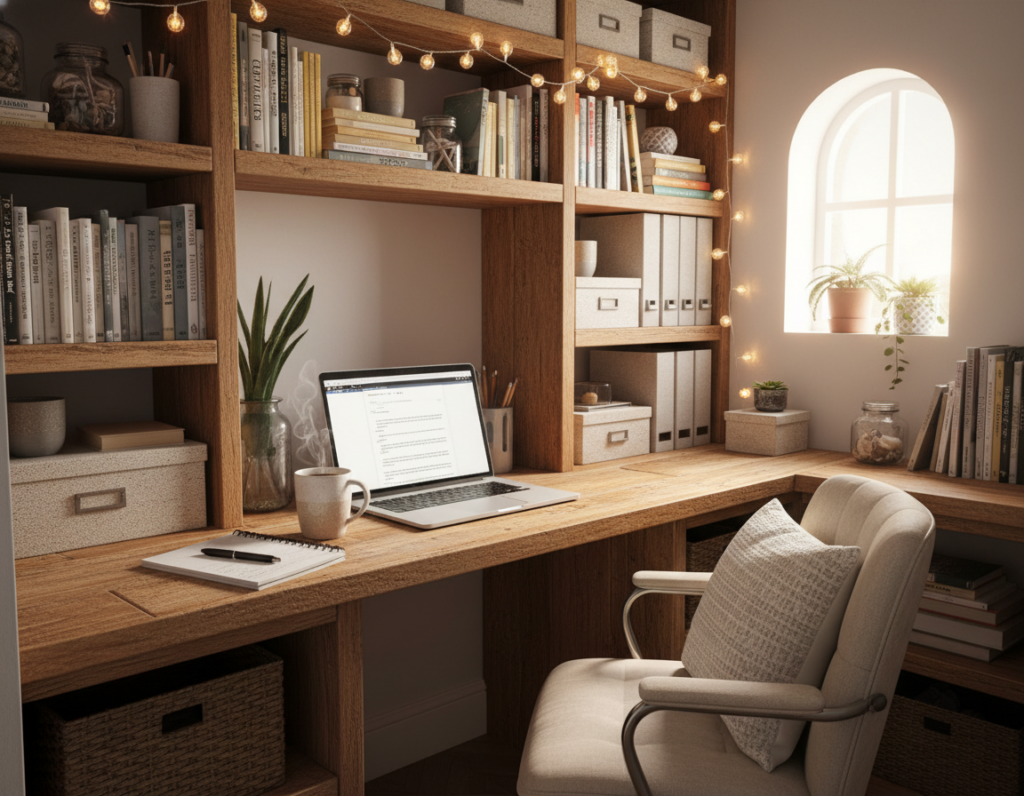
Creating a clear studio apartment workspace starts with simple moves that change how a home feels and functions. Designers often recommend floating the sofa to free up a narrow band of space behind it. That gap becomes a smart place for a slim table that doubles as a desk and keeps a computer off the coffee table.
When people work home, clutter can creep onto the bed or floor. To protect downtime and boost productivity, they should make sure work items have a designated area. A foldable desk stored in a closet is an easy way to reclaim the room at the end of the day.
These tips focus on arranging furniture to expand usable area and create a compact office without losing the place’s comfort. Small changes save time, keep items tidy, and sharpen the focus needed for daily tasks.
Assessing Your Available Space
Begin by measuring every corner and marking clear zones for work, storage, and relaxation. A quick floor map helps identify where an apartment office could fit without crowding the rest of the home.
Look for traffic paths and light sources. Note the spots where the person moves most during the day and how much time they spend in each area. This makes it easier to define a practical apartment office that suits daily routines.
Declutter with purpose. Remove items that do not support work and decide what must stay in the home. If the room feels tight, consider external help: companies such as easyStorage offer London storage starting at only £18.50 with no hidden charges to clear extra belongings.
“A small clear zone and smart storage can turn a cramped room into an efficient place to get things done.”
Finally, evaluate the type of setup needed. Choose storage options that free up floor area and create a calm, functional apartment office suitable for a small apartment or studio environment.
Selecting the Perfect Studio Apartment Workspace
A productive home office begins by finding calm areas that reduce distractions and support focus. Small changes in design can protect a person’s routine and improve work-life balance.
Identifying Quiet Zones
Look for a low-traffic area that gets steady light and limited noise. Position a desk near a window when possible to boost mood and productivity.
If external sounds are unavoidable, investing in noise-canceling headphones helps maintain focus in a shared apartment. This small buy lets someone keep working home without distraction.
Creating Boundaries Between Work and Rest
To protect downtime, make sure the bed is not a regular desk. A clear split between sleep and work helps the mind switch off.
Choose a sturdy table or small desk and a comfortable chair. Thoughtful furniture placement defines the office area and can increase productivity without crowding the room.
- Keep cables tidy and storage close.
- Use rugs or shelving to mark the work place.
- Limit work items on lounge surfaces to preserve rest time.
Choosing Multi-Functional Furniture Solutions
Selecting dual-purpose furniture helps reclaim space while keeping daily tasks within reach. For a small apartment, the right pieces turn a living area into a practical home office without permanent changes.
Selecting Foldable and Compact Desks
A foldable desk or wall-mounted table is a smart way to save floor space. When not in use, these units tuck into a closet or fold flat against a wall.
They work well for someone working home on a laptop. Make sure the surface is flat; a coffee table is cozy but not the best type of surface for long tasks.
- Desk that doubles as storage keeps tools off the floor and out of sight.
- A chair that fits under the desk preserves walking paths and reduces clutter.
- Choose pieces with drawers or shelves so the bed and sofa stay clear of office items.
Solutions like drop-leaf tables and compact cabinets offer much space efficiency. Investing in quality furniture pays off with better posture and faster setup each day.
Maximizing Vertical Storage Potential
Look up for storage: a slim system above the desk keeps essential items close and the floor clear. Wall-mounted shelves make the most of otherwise wasted wall area and free the work surface for tasks.
Use hooks or a pegboard to hang headphones and small office tools. Clear bins or labeled baskets hold supplies so the room looks tidy and items are easy to find.
Proper organization of vertical zones makes a tight home office feel larger and more professional. They create a dedicated storage band above your desk that keeps daily essentials within arm’s reach.
“Stacking storage up, not out, is one of the simplest ways to win back usable space.”
For step-by-step ideas on shelving and layout, see how to maximize vertical space for storage and adapt the solutions to limited space at home.
Optimizing Lighting and Ergonomics
A well-lit area and a supportive chair are two simple upgrades that lift mood and reduce fatigue while working at home.
Leveraging Natural Light
Position the desk near a window when possible to use natural light. Daylight boosts mood and raises productivity for most people.
Keep curtains light and reflective surfaces minimal so the sun spreads across the surface without glare.
Investing in Supportive Seating
Choose a chair with good lumbar support. You should make sure the seat height keeps feet flat and knees at a right angle.
A quality chair reduces back strain and improves focus during long time blocks of work.
Reducing Eye Strain
Set monitor or laptop top at eye level and keep the screen an arm’s length away to cut glare.
- Use task lamps to light the desk without washing the whole area in harsh light.
- Take short breaks every 20 minutes to rest eyes and stretch the back.
- Invest in quality tools like a monitor riser or anti-glare filter for the computer.
Small design changes to lighting and seating produce big comfort gains. They help maintain a healthy posture and make the home office easier to use for longer stretches of productive time.
Maintaining Focus Through Organization
A tidy area and simple systems make it easier to stay focused in a tight living space.
Clear zones help a person separate work from rest. They should keep the desk free of unrelated items and store extras in a closet or labeled bin.
Use noise-canceling headphones and a supportive chair to protect concentration and improve work-life balance when working home. Small comforts cut interruptions and reduce stress over time.
“Regularly sorting supplies and computer tools saves minutes every day and keeps posture problems at bay.”
- Keep daily tools and supplies within arm’s reach.
- Clear the floor and bed of work items each evening.
- Set a brief weekly tidy session to reset the room and storage.
These solutions make an apartment office or small apartment room feel professional. For a practical checklist to set up a productive home office, see this short guide: productive home office.
Conclusion
With a few deliberate choices, any room can balance comfort and productivity for remote work and daily life. Small layout shifts, smart furniture, and simple storage systems make this possible in even the tightest home.
Creating a functional office is achievable by maximizing light, vertical space, and ergonomic seating. Consistency in routine and clear zones helps sustain focus and wellbeing over time.
For moving or storage help, contact Island Flats at (619) 232-4138 or J Street Flats at (619) 696-6922. By following these tips, someone can transform an apartment or studio into a space that supports both career and personal health.