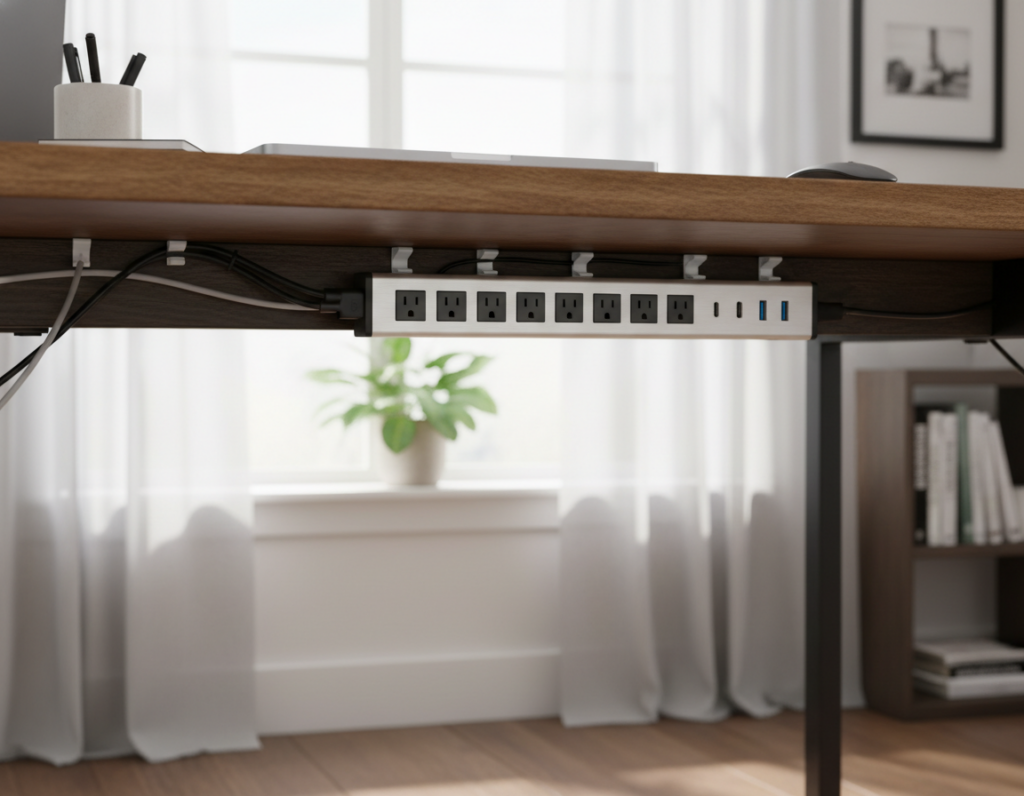
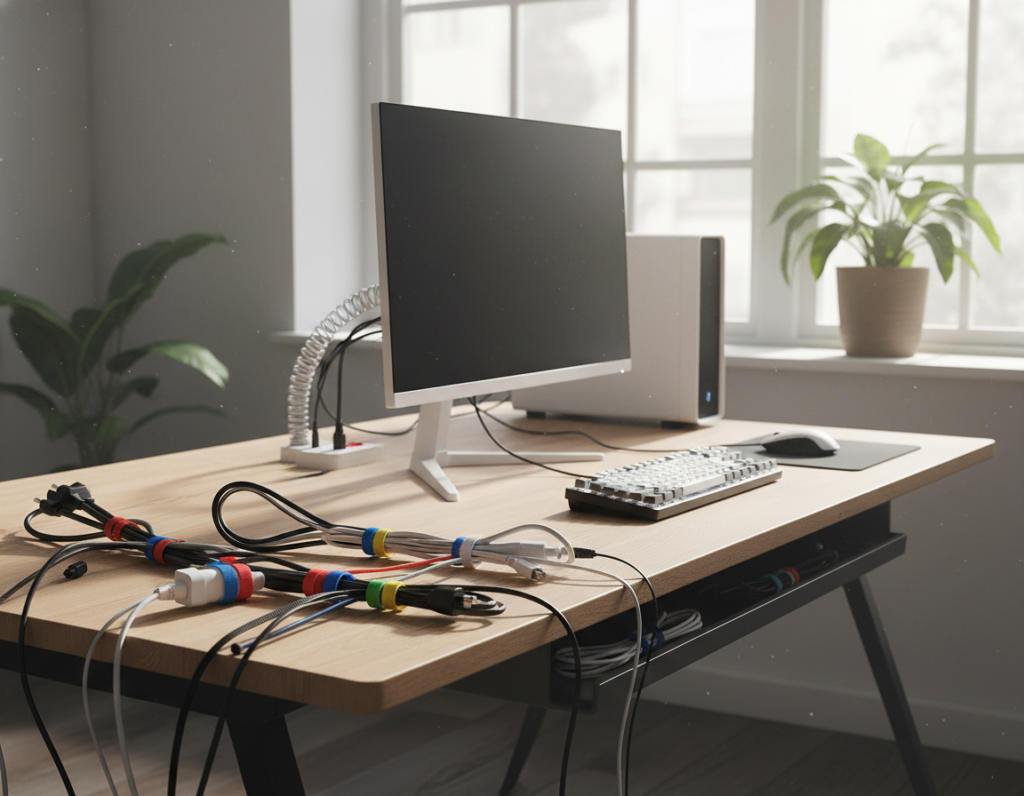
A 65” screen can transform a living room, but it often leaves cords and wires trailing down the wall and across the floor. That clutter can ruin the modern look of a home and make the space feel messy.
They can achieve a seamless setup with a few simple steps that do not need major construction or pro help. Small accessories and smart routing will hide wires and restore a tidy look.
Many homeowners start by grouping cables with Velcro ties, shortening loops, and running lines along baseboards. For more permanent fixes, a paintable raceway or in-wall option creates a clean finish.
For practical tips and step-by-step options, see a detailed guide on how to manage cords and conceal wiring patterns at how to hide TV wires.
The Importance of Cable Management
Good cable management transforms a chaotic setup into a neat, functional living space. Messy cords are a common annoyance as more electronics appear in the living area. Simple steps help reclaim visual calm and make the room safer.
When people hide cords properly, they reduce dust build-up and cut trip hazards. That protects devices and the people who use them. Proper management also speeds troubleshooting when a power connection needs attention.
- Maintain a tidy space by grouping cords and labeling ends for easy access.
- Keep power lines clear of walkways to prevent trips and accidental unplugging.
- Store excess cable length behind furniture to avoid tangles and stress on plugs.
“Consistent management is the foundation of a tidy home and protects expensive electronics.”
Effective TV Wire Hiding Ideas for Every Home
A few well-chosen accessories can turn a messy setup into a polished, safe focal point. Small steps—like grouping cords and choosing a neat cable raceway—deliver immediate improvements without major work.
Safety Considerations
Safety comes first. Using a cord cover creates a protective barrier that keeps cords away from pets and children in the living room.
A clear cable management plan also reduces trip hazards and prevents stress on plugs and ports.
- Route power lines away from walkways.
- Use mounts with integrated channels—Mount-It! offers options that keep cables bundled and secure.
- Store excess cable length in a console or storage box to avoid tangles.
Aesthetic Benefits
A tidy arrangement improves the room’s decor and makes electronics blend with furniture. A paintable cable raceway is a popular solution because it matches wall color and stays discreet.
Many homeowners prefer a custom console for concealment and storage. This approach pairs function and style for a clean, modern look.
“A well-planned cable strategy provides both aesthetic benefits and safety.”
Running Cables Inside the Wall
Routing power and AV lines within a wall creates a streamlined look that lasts for years.
Gathering Materials
They should collect a stud finder, drywall saw, low-voltage mounting brackets, and a certified in-wall rated cable. A single cable raceway kit helps prep openings safely.
Planning the Path
Careful planning prevents trouble. Mark studs and existing electrical runs so the team avoids cutting into live circuits.
- Map entry and exit points on the walls.
- Choose routes that keep cords clear of plumbing and HVAC.
- Consider future ports for extra devices to save time later.
Installation Steps
- Cut access holes between studs and install low-voltage mounting brackets.
- Fish the wires through the wall cavity and secure them to studs.
- Install an in-wall power kit or a certified power strip rated for in-wall use to feed devices.
Proper cable management inside walls creates lasting order. The result is a safer, clutter-free space that adds value and keeps visible cords out of sight.
Utilizing Cable Raceways for a Seamless Look
A cable raceway is a simple solution that turns messy cords into a clean, low-profile line.
When running cables inside a wall isn’t possible, a surface-mounted channel provides an effective alternative.
Installers attach the raceway to a wall using strong adhesive for fast, tool-free placement. This keeps cords out of sight and secures them from pets and foot traffic.
Painting the channel to match room decor helps it blend into the living space. The result is a seamless look that preserves the appearance of the home.
- Manages multiple cords for a neat appearance.
- Protects wires from damage while remaining discreet.
- Offers a non-permanent fix that still looks professional.
“A painted cable raceway delivers a simple, protective channel that keeps cords hidden from sight.”
Concealing Cords Behind Furniture
Tucking cables out of view behind a console instantly improves the room’s visual flow. It is a fast, non-invasive step that works in most living spaces.
Start by mapping where cords meet the back of the unit, then plan routes that stay close to the wall. Command accessories are recommended because they stick to painted walls, metal, and glass without damage.
Securing with Clips
Use clear adhesive clips to fasten cords to the back of a console. Clear clips protect the furniture finish and keep cords behind the unit so they are out of sight.
- Attach Command clips along the back edge to hide cords behind your media console.
- Apply adhesive clips to prevent cords from dangling at the sides.
- Bundle extra length with zip ties before pushing the console to the wall.
“A neat back-of-furniture plan keeps cords organized and preserves the room’s clean sight line.”
This cover-and-secure approach keeps electronics functional while reducing visual clutter. For photos that illustrate proper placement, see the Andrey_Popov/Shutterstock examples often used by professionals.
Using Decorative Baskets and Boxes
A well-chosen basket or lidded box can turn messy wires into tidy decor. Place one on the top of a console to keep cords out of sight and maintain a clean living surface.
Woven baskets work well for extra cords and power adapters. They add texture to a room while offering practical storage that keeps things off the floor.
Covogoods produces covered storage solutions that blend with many home styles. Their pieces let homeowners tuck routers and modem cables inside a neat box so the console looks organized.
- Use a lidded box on the console to hide cords and small devices.
- Store adapters and extension cables in a basket to prevent tangles.
- Choose a design that matches existing decor for a cohesive living room look.
“Decorative storage doubles as function and style, clearing sight lines while enhancing the room.”
Managing Wires with Cable Sleeves
A flexible cable sleeve is a quick upgrade that improves appearance and simplifies maintenance. It bundles cords into a single run and keeps the area behind a console neat.
MOSOTECH offers adjustable sleeves that wrap multiple cords without relying on zip ties, so the result looks cleaner in a home office or living room.
These sleeves are durable and bend around corners near the wall, making them a practical cable management solution for modern electronics.
- Bundle cords for a tidy appearance and safer living spaces for kids and pets.
- Use sleeves instead of zip ties for easier access when adding or removing devices.
- Hire professionals—Mr. Handyman of Memphis can design storage and shelving that integrates sleeve runs behind a console.
“Bundling cords creates a safer, more organized setup that complements room decor.”
Installing Custom Floating Shelving
Custom floating shelves deliver a sleek look while keeping cords tucked away behind a clean face. They create a pared-back focal point and free up floor space for a minimalist layout.
Shelves can include built-in channels or a rear cavity so power and AV lines run unseen from devices to outlets. This approach keeps cords organized and out of sight without bulky furniture.
- Mounted securely to studs, floating shelves hold electronics and decor safely.
- Integrated cable routes let devices sit on display while hiding connections.
- The design maximizes floor space for a cleaner living area.
- Choose finishes that match the room for a seamless, custom look.
“Professional installation ensures shelves are anchored correctly and cords are routed safely.”
For homeowners who want a polished result, hiring a pro avoids misrouting and reduces hazards. A certified installer will test load capacity and conceal power paths so the shelf stays both elegant and safe.
Routing Cables Through Baseboard Channels
Routing cords along the baseboard creates a nearly invisible path that keeps lines safe and out of sight.
This method moves power and AV lines across a room without the need to cut into the wall or alter trim. A low-profile baseboard channel follows the room’s perimeter and blends with existing molding.
Installers often use small adhesive clips to secure the cover to the baseboard so the channel stays firmly in place. These clips make the run neat and prevent the cord from pulling free when furniture shifts.
The result is a clean look that keeps cords virtually invisible to guests. A dedicated channel also protects wires from being stepped on or crushed by chairs and heavy foot traffic.
- Choose a paintable baseboard cover to match trim for seamless blending.
- Use adhesive clips at 12–18 inch intervals for a secure hold.
- Run cables inside the channel to keep them organized and out of reach.
“Routing along the baseboard is a low-cost, non-invasive way to manage cords while preserving room aesthetics.”
Incorporating Furniture with Built-in USB Ports
Adding furniture that includes USB outlets changes how power is delivered in a living space. Modern sofas and side tables now place charging where people sit, so cords rarely cross floors.
Choosing pieces with integrated ports helps homeowners keep cords neatly stowed inside the frame. This approach reduces the need for extra adapters and limits visible clutter in the room.
- Streamlined charging: Built-in ports provide direct power to devices without multiple strips.
- Cleaner floors: When outlets sit in a sofa or table, it is easier to keep cords out of traffic paths.
- Designed for modern home life: These pieces support everyday tech while preserving a minimalist look.
“Furniture with integrated USB ports offers a subtle, practical way to charge devices while maintaining a clean, functional living space.”
Hiding Cords in Drawers
A simple drawer modification can turn cluttered cords into a hidden, organized system.
Midjourney concepts often show how a shallow drawer becomes a tidy charging hub. Drill a small hole in the back of the drawer and route the power cord through it so a power strip stays inside.
Place a small box or organizer in the drawer to separate adapters and devices. This keeps the console surface free and makes each device easy to reach without visible mess.
- Drill a neat access hole at the back for cables to enter safely.
- Use a ventilated storage solution and leave space around the power strip.
- Label cords and tuck excess into a small box for quick access.
- Check that any power strips have airflow to protect electronics and reduce heat.
“A drawer-based power center keeps essentials charged while preserving a clean room aesthetic.”
Strategic Use of Decor to Mask Wires
Decor can do more than decorate; it can cleverly conceal unsightly cords and restore a room’s focus.
Start by surveying where cords run along the wall and the back of the console. Place plants, framed art, or stacked books to block direct sight lines without blocking airflow to devices.
Use a decorative box to mask the back of the setup. A lidded box keeps power strips and adapters out of sight and creates a tidy backdrop that blends with existing decor.
Arrange small objects in front of cords behind the console to make them less noticeable. This uses what the homeowner already owns and avoids extra purchases while improving the room’s style.
- Layer items: taller plants at the back, low trays in front to hide cords behind objects.
- Choose texture: woven boxes or matte frames reduce glare and draw attention away from cords.
- Balance form and function: ensure access to plugs while keeping cords out of sight.
“Thoughtful styling can turn clutter into a curated display, keeping cords out of sight and the room looking intentional.”
Adding Wainscoting for Hidden Channels
Wainscoting can transform a plain wall into a smart conduit for power and AV runs. This approach blends classic decor with practical cable management so the living room keeps a refined appearance.
Installers create a shallow channel behind the panels and mount a slim cord cover or routed cable path. The result hides cords and wires while giving the room a tailored look.
Inside the cavity, one power strip or a small box can sit flush to the studs. Clips fasten cords in place so power strips and wires stay secure and organized behind the paneling.
- Protects cables: panels shield cords from pets and foot traffic.
- Cleaner appearance: trim creates a finished look without visible clutter.
- Permanent management: built-in channels make maintenance straightforward.
“A wainscoted channel combines traditional style with modern cord management.”
Conclusion
A few targeted solutions can give any entertainment area a clean, finished look. Good cable management and simple cord routines make a room feel more open and safer for everyone.
Whether using a cable raceway, a decorative box, or built-in storage, homeowners have many ways hide clutter. Choose a solution that fits the decor and keeps power runs tidy so the overall appearance stays polished.
Tuck the power strip and extra cable length into a box or behind the console. Secure remaining cords with clips so devices stay accessible and electronics stay protected.
Managing cords is an easy way to improve the look of your home. With a few small steps, this cable plan turns messy setups into a neat, functional space you can enjoy every day.